Showing posts with label Art. Show all posts

Tuesday, January 29, 2019

Michelangelo's Most Powerful Statue


michelangelos-moses_san_pietro_in_vincoli

Moses (1545, Carrara marble, twice life-size, San Pietro in Vincoli Church, Rome)
The angry Patriarch has just seen his people worshipping the Golden Calf and he is about to throw down the stone tablets with the Ten Commandments that God has given him.
And the horns? Moses had horns after seeing God according to a medieval tradition based on what scholars say was a mistranslation of the Bible. Later translations speak of a saintly radiance or rays of light.

People have always admired Moses’ beautiful arms and hands, as well as his long, soft beard. “One might almost believe that the chisel had become a brush,” says Vasari. But some have found fault with the strange outfit he is wearing—imitated perhaps from antique statues of barbarians.
This Moses is the central figure of the tomb of Pope Julius II.

Michelangelo began many figures for the Pope’s tomb but one after another they were scrapped or sold. The commission kept changing. Originally there were going to be forty statues and Pope Julius would have had the most spectacular mausoleum in the world. But he cancelled the first project and later versions by his heirs got smaller and smaller. This is the final, almost pitiful, result. Yet the single statue of Moses, one of the most impressive figures ever carved, is enough to perpetuate Julius’ memory.

Friday, January 25, 2019

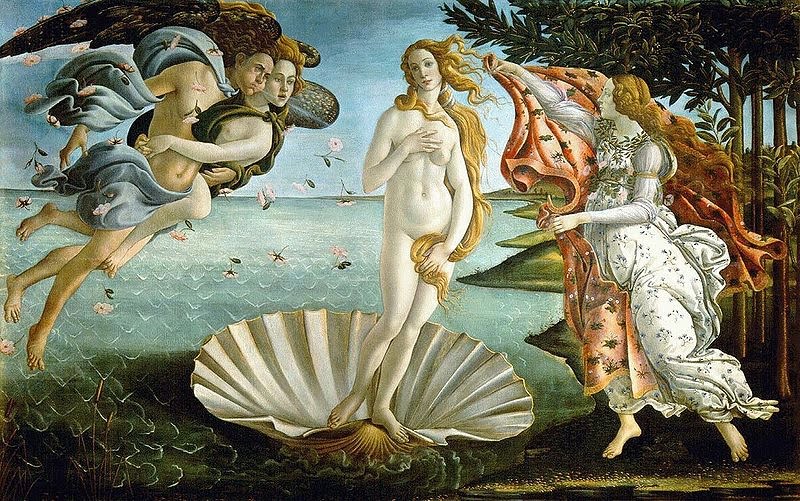
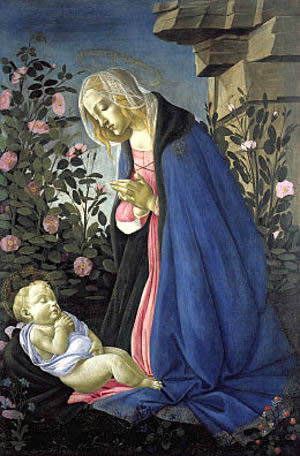
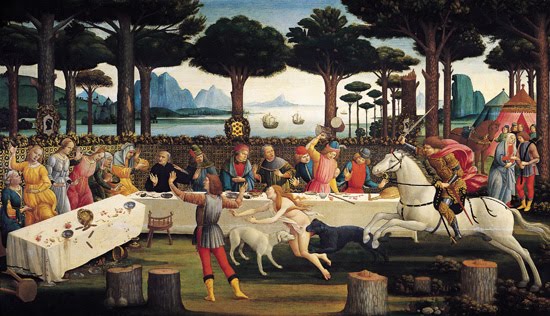
Botticelli


Living and working during the same time as greats like Michelangelo and Leonardo Da Vinci, it would be easy for even a great artist like Botticelli to get lost in that crowd Alessandro Filipepi, known as Sandro Botticelli, (1444-1510) began his career during the Italian Renaissance period. Botticelli was born in Florence around 1445 where he would live out the rest of his life. As the youngest of five children, Botticelli’s father, a tanner, allowed him to become an apprentice to a goldsmith. During this apprenticeship, the goldsmith he worked with gave him the name Botticelli, meaning ‘little barrel.’


After a time, Sandro convinced his father that he wanted to study painting and was chosen to be apprentice to the well known painter Fra Filippo Lippi. Lippi was well known for how he used color on church altarpieces and helped Sandro discover a similar style for his own work. Sandro Botticelli developed tender expressions in his subjects face and in their gestures. He also used decorative details that were influenced by his training. Botticelli quickly became recognized as a gifted artist all by himself. By the time he was 15 years old, he was able to open a workshop dedicated to his own work.

In Sandro Botticelli’s workshop, he chose to have many apprentices to help him complete his work. Sandro taught them to set up and prepare his supplies so he could concentrate on painting. When Sandro thought one of his apprentices was ready, he had some of them paint for him under his close supervision. Using these practices, he was able to produce large amounts of commissioned work.


Botticelli’s style evolved into one that was very distinct. His portraits seemed to have a melancholy or sad characteristic to them. Sandro stressed line and detail using them to bring his characters alive – as if acting out a scene. He included in his style a flowing characteristic that would clearly identify work as his. Botticelli also included Neoplatonism in his work. This meant that he would bring together in one painting ideas that belong to both Christianity and pagan ideas which may have included mythology. One theme that Botticelli used over and over again was the idea of a very sad young girl that was detached from what was going on around her. This theme appeared in many of his portraits throughout his career. Another theme Botticelli liked tackling were the roles male and females played in society. Sometimes Sandro would show traditional roles, but other times, he showed females as the dominant, most important figure.


Sandro Botticelli’s work was most in demand by the Medici family. The Medici’s were a very rich and prominent member of the Florence society. Botticelli is thought to have used them as subjects for a large number of his works. They traveled in very important circles and introduced Botticelli to some of the most influential people. In these different settings, Sandro gathered material to use in his portraits and scene portrayals. The Medici family would pay huge sums of money for Botticelli’s work.

In 1481, Botticelli was invited to Rome to take part in the painting of the Sistine Chapel. Sandro joined artists such as Perugino, Ghirlandaio and then Michelangelo in contributing to the most well known piece of Italian art. While there, Botticelli worked on several pieces in the Chapel. In all, Botticelli painted three large pieces, as well as seven papal portraits in the Sistine Chapel.


As Sandro grew older, his style underwent a remarkable change. Sandro became a follower of the monk Savonarola who was a prominent civic leader in Florence. He stressed giving up all worldly things. He was very charismatic and often spoke of death and God’s wrath upon the people. Many of Botticelli’s previous paintings were considered ungodly and were burned along with objectionable books and playing cards. When Savonarola’s popularity ended, he was burnt in the center of Florence. Many followers fled the city, but Botticelli stayed and continued to paint. Many of his works contained a very religious feel to them. Sandro included highly religious symbolism in his paintings; they seemed to be telling a story. Sandro became known as an excellent altarpiece painter and earned large amounts of money through those commissions.


Botticelli’s later years seemed to be a disturbing time for him. As times changed in Florence, Botticelli tried to keep up. He often took on difficult commissions that other painters turned down. His rotating style reflected that Botticelli was struggling as a painter. His paintings were full of emotion raging from violence to grace and compassion.

Even though Sandro was trying to keep up his status as a painter, he was still recognized with the honor to be part of the committee that chose the spot where Michelangelo would place his statue David


Sandro Botticelli died at the age of 65. Some say Sandro was poor and unaccomplished at his death. This could be attributed to the rising popularity of new and contemporary artists such as Michelangelo, Raphael and Leonardo Da Vinci. Even though his work is now thought to be among the most masterful of his time, his work lay forgotten for over 400 years after his death. Looking back at history, he now has the respect he earned through a lifetime of achievement. Sandro Botticelli contribution to the Italian Renaissance period was one of great distinction.

Wednesday, January 23, 2019

M. C. Escher


>


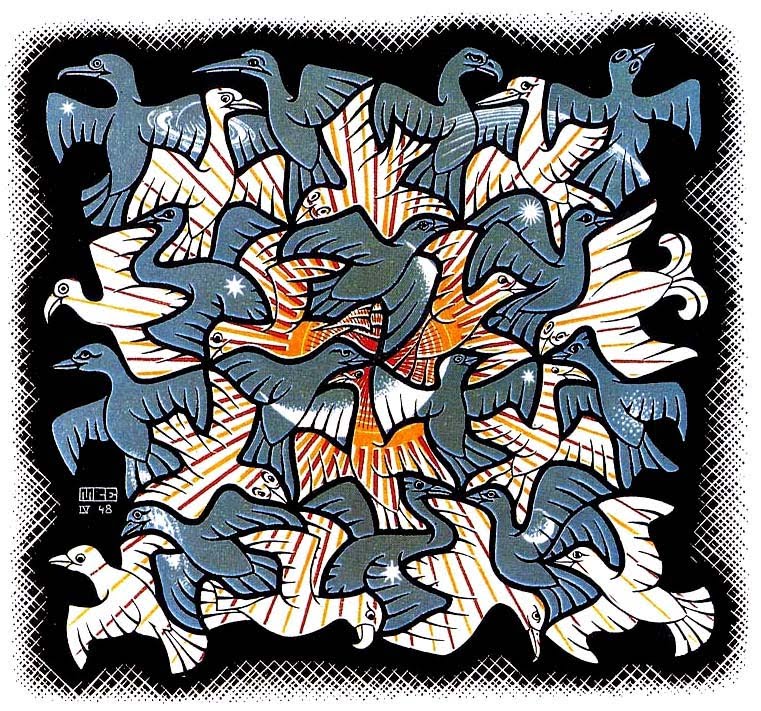
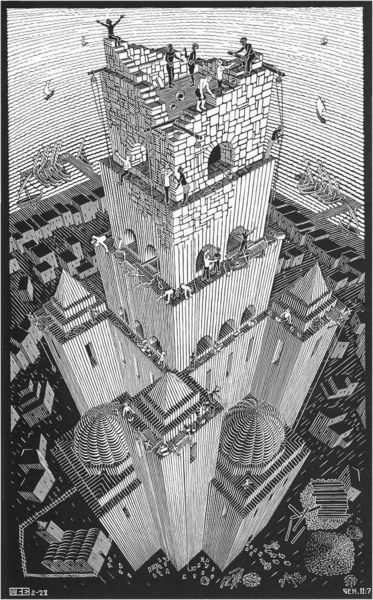
M. C. Esher (in photo) was a left handed graphic artist. He worked in many mediums, but was famous for his woodcuts. All these pieces are woodcuts. The color work above (Sun and Moon) is my favorite. The detail shows his craftsmanship. A true artist. If you would like to learn more about him, check out his official website here
There is more to his pieces, than the image you see at first glance. They are geometric illusions.


Tuesday, January 22, 2019

Picasso

>
 
Born: 25 October 1881
Birthplace:
Málaga, Spain
Died:
8 April 1973
Best Known As:
The 20th century’s most famous artist
Pablo Ruiz y Picasso showed artistic ability at an early age, and when he began to study art seriously in Barcelona and Madrid, he was already a skilled painter. In the early 1900s he visited and eventually settled in Paris, where he was part of a vibrant artistic community that included Gertrude Stein. Although greatly influenced by other artists in Europe and beyond, Picasso was inventive and prolific, and early in his career earned a worldwide reputation as an innovator. Along with Henri Matisse, he is considered one of the greatest artists of the 20th century. His enormous body of work spans so many years that art experts generally separate his career into distinct phases, such as the Blue Period, the Rose Period and his most famous contribution to modern art, Cubism. Picasso, unlike so many before him, was an international celebrity as well as an important contributor to the world of art.


Sunday, January 20, 2019

Henri Matisse


> 

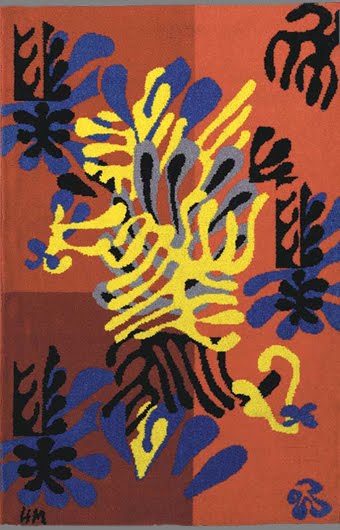
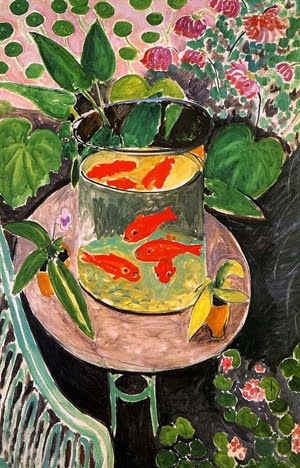
Henri Matisse was born on December 31, 1869, in Le Cateau-Cambrésis, France. He grew up in Bohain-en-Vermandois and studied law in Paris from 1887 to 1888. By 1891 he had abandoned law and started to paint. In Paris Matisse studied art briefly at the Académie Julian and then at the cole des Beaux-Arts with Gustave Moreau.

In 1901 Matisse exhibited at the Salon des Indépendants in Paris and met another future leader of the Fauve movement, Maurice de Vlaminck. His first solo show took place at the Galerie Vollard in 1904. Both Leo and Gertrude Stein, as well as Etta and Claribel Cone, began to collect Matisse’s work at that time. Like many avant-garde artists in Paris, Matisse was receptive to a broad range of influences. He was one of the first painters to take an interest in “primitive” art. Matisse abandoned the palette of the Impressionists and established his characteristic style, with its flat, brilliant color and fluid line. His subjects were primarily women, interiors, and still lifes. In 1913 his work was included in the Armory Show in New York. By 1923 two Russians, Sergei Shchukin and Ivan Morozov, had purchased nearly 50 of his paintings.

From the early 1920s until 1939, Matisse divided his time primarily between the south of France and Paris. During this period, he worked on paintings, sculptures, lithographs, and etchings, as well as on murals for the Barnes Foundation, Merion, Pennsylvania, designs for tapestries, and set and costume designs for Léonide Massine’s ballet Rouge et noir. While recuperating from two major operations in 1941 and 1942, Matisse concentrated on a technique he had devised earlier: papiers découpés (paper cutouts). Jazz, written and illustrated by Matisse, was published in 1947; the plates are stencil reproductions of paper cutouts. In 1948 he began the design for the decoration of Chapelle du Rosaire in Vence, which was completed and consecrated in 1951. The same year a major retrospective of his work was presented at the Museum of Modern Art, New York, and then traveled to Cleveland, Chicago, and San Francisco. In 1952 the Musée Matisse was inaugurated at the artist’s birthplace of Le Cateau–Cambrésis. Matisse continued to make large paper cutouts, the last of which was a design for the rose window at Union Church of Pocantico Hills, New York. He died on November 3, 1954, in Nice.


Saturday, January 12, 2019

Rene Magritte


> 

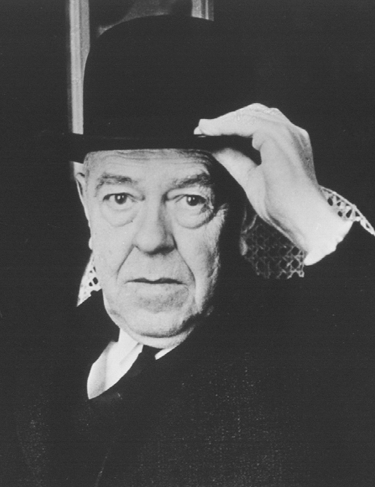
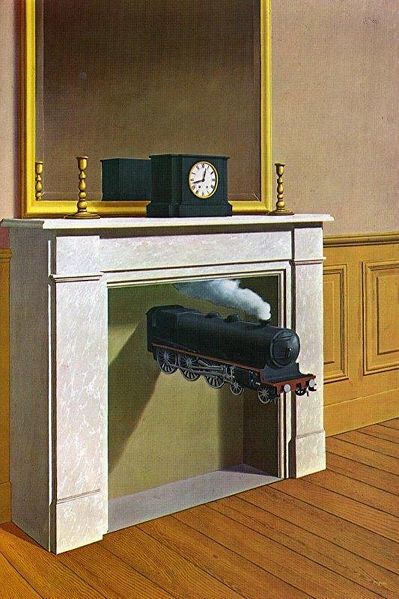
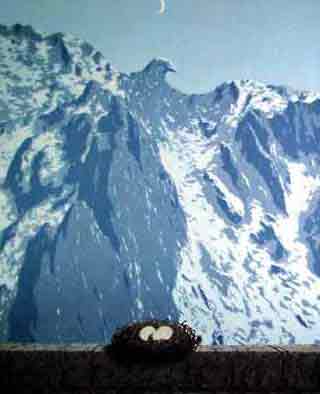
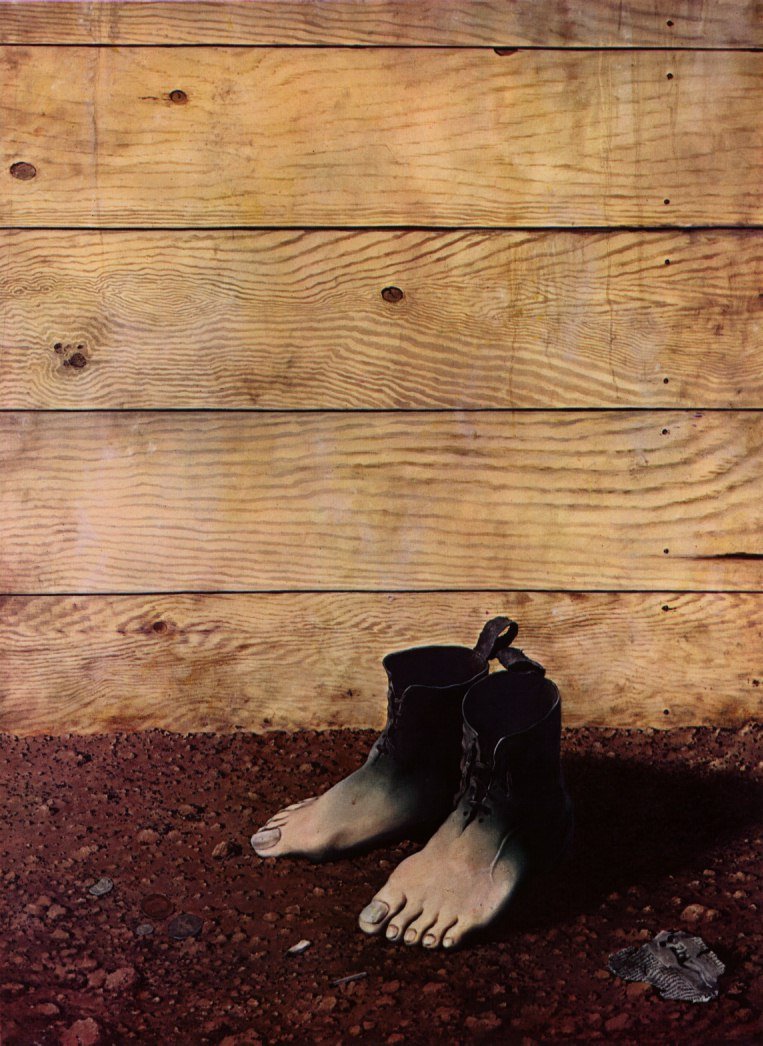
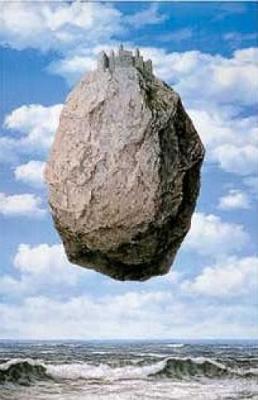
Rene Magritte (1898-1967) was a Belgian Surrealist painter who was trained in Brussels and traveled in France, Britain, Germany and Holland. He lived near Paris, 1927 and came into contact with the French Surrealist movement, although he painted some Impressionist-style pictures during World War II. He later lived in Brussels and painted murals for Belgian public buildings. His pale and dryly painted works have a dream-like clarity, with, frequently, an unexpected wittiness. They often have nude women, sometimes accompanied by men in bowler hats, and similar incongruities.


Thursday, January 10, 2019

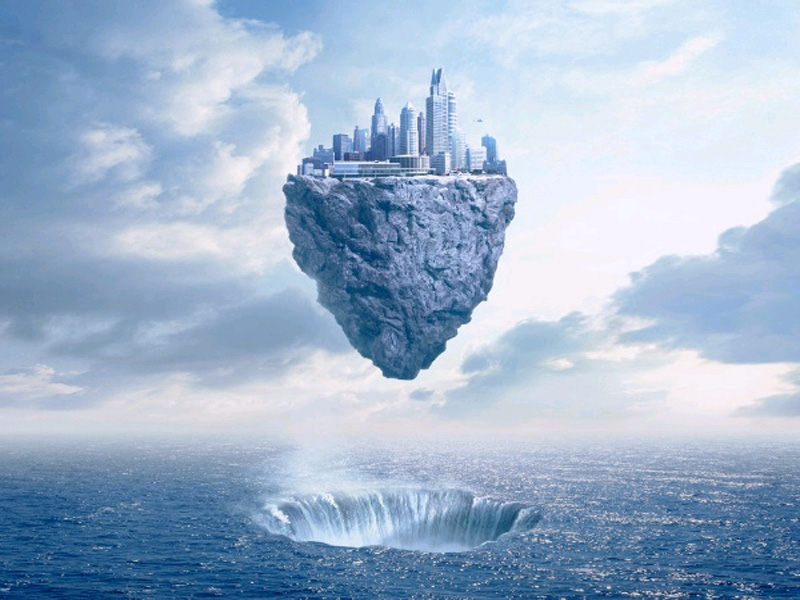
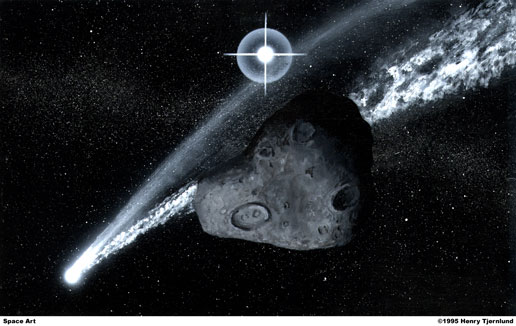
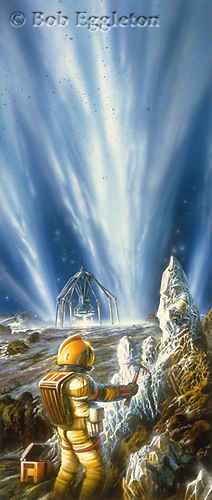
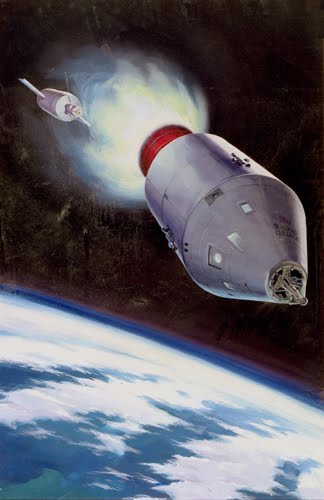
Space Art


Now that our scientific instruments can see more than 15 billion light years across the Universe, the  Earth is indeed a small, fragile planet.


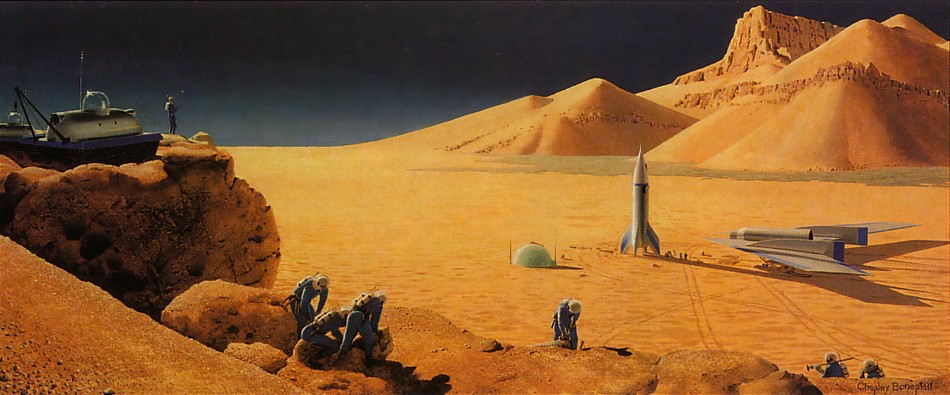
Space Art has been around a long time. From the illustrations of a Jules Vern story, to the animation of The Jetson cartoons. Space Art became popular in the 1950’s when the imaginary became reality. Space Art today, is more about human interpretation of reality, than an imagination building an unreal world.




Space Art can be generated in minutes on a computer. The pioneers of the medium spent days and days creating the color, light, and composition that was truly their own invention, not to mention that everything was hand painted. The Hubble Telescope creates its own real life space art through its photographic lenses.


The artwork of the space shuttle is merely a full color enhancement of a real mechanical design. The design lost out, that is not what the new shuttle will look like. It is amazing how the old Space Art was so reflective of today’s real space technology.


It’s the appeal and infinity of space itself, that still allows the imagination of both the artist and the viewer, to be enthralled. As imaginative as these Space Artists are, they can’t match the real beauty and oddities of space itself.


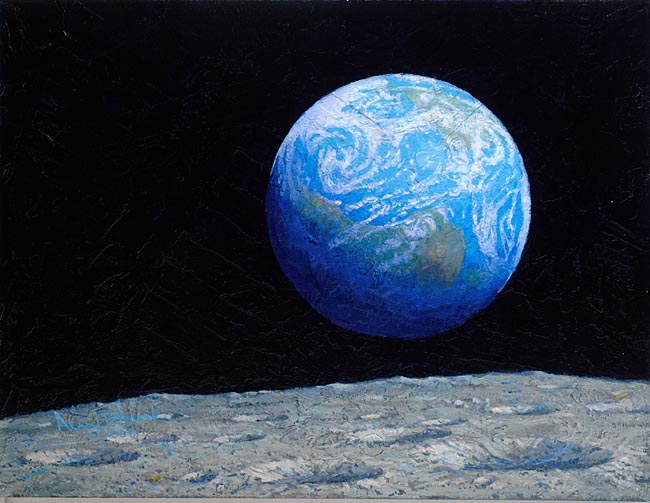
Below is Alan Bean’s hand painted rendition of what he actually saw as an astronaut.


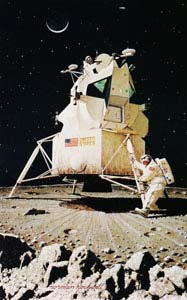
Below is Norman Rockwell’s hand painted rendition of “Man On The Moon”


Just like the old masters, these images are a result of talent, and take us beyond our own little world.

Monday, January 7, 2019

Ansel Adams Photography


>

The cityscape color photograph of Tuscon, Arizona, is an Ansel Adams photograph. All these photographs are Ansel Adams photographs. They are not his “famous” pictures, but if you know his work, they are like looking at a signature.

Some people may have never seen color work by Ansel Adams, but as you can see, he was just as talented with color film.


That’s the old guy there.

Looks like a western movie character.

He is my favorite photographer, by far. For the same reasons all critics hail him as a great photographer. He was a master of light, contrast, composition, and black and white.
The eight photographs I chose to post, are some of my favorites, yet may be unknown to you, even if you think you had seen his work.

Hope you enjoy them as much as I do.